Vietnam has sprung up as a serious player for exports of sheet metal components, with many fabricators being located in Bac Ninh, Hung Yen, Binh Duong, and Dong Nai. These companies now ship parts directly to Japanese automotive OEMs, European industrial equipment manufacturers running regional assembly, and to large electronics manufacturers.
It's a proof of how quickly the industry has developed in Vietnam as the customer list did not exist fifteen years ago. It is a reliable signal of how far the supplier base has come. For European procurement teams considering Vietnam, there are plenty of opportunities worth investigating.
Why Vietnam for Sheet Metal Sourcing
Increasingly more European manufacturers reduce their dependency on China and have looked across Southeast Asia with Vietnam as one of the most developed alternative for metal fabrication. For European industrial buyers sourcing precision sheet metal and fabricated assemblies, Vietnam offers an accessible and cost-competitive supplier base with Tier 1 suppliers present thanks to Samsung, LG, and Japanese OEM investment in electronics and automotive components. For categories like automotive components, industrial enclosures, electrical cabinets, and precision hardware, the alternative supplier evaluations that started two years ago are now translating into qualified second sources and live volume transfers.
At the same time, the EU-Vietnam Free Trade Agreement eliminates duties on industrial goods entering the EU, and steel and aluminium fabricated products fall within tariff lines that move toward zero on a defined schedule. CPTPP and RCEP add further preferential access for buyers serving Japan, Australia, Canada, and the wider Asia Pacific.
Cost and capability are converging. Vietnamese fabricators now combine modern equipment with ISO 9001 certified quality systems, and a growing tier of automotive suppliers carries IATF 16949. This is no longer a low cost low quality market. It is an increasingly sophisticated manufacturing base serving demanding Japanese, Korean, and European OEMs.
What Vietnam Can and Cannot Make
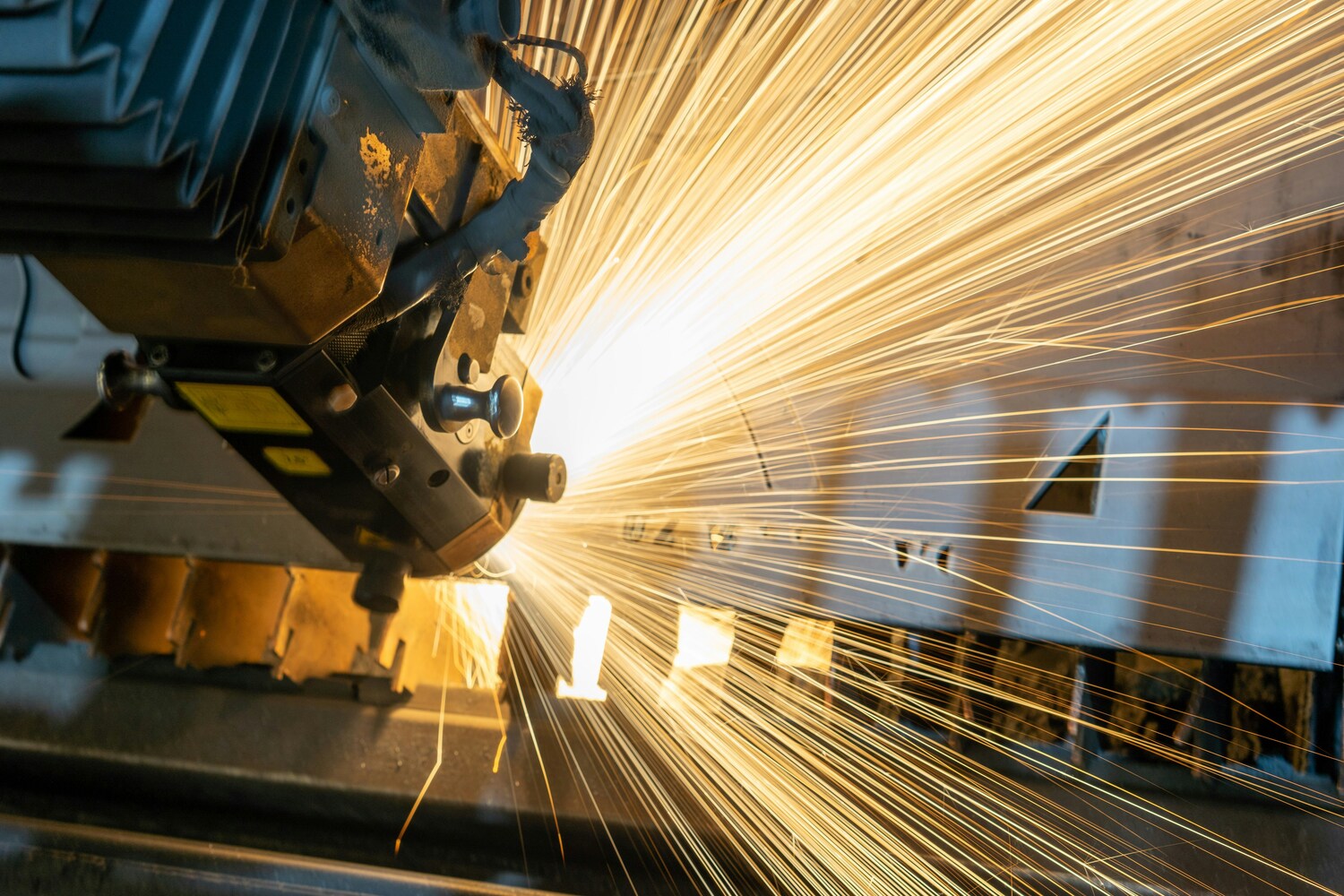
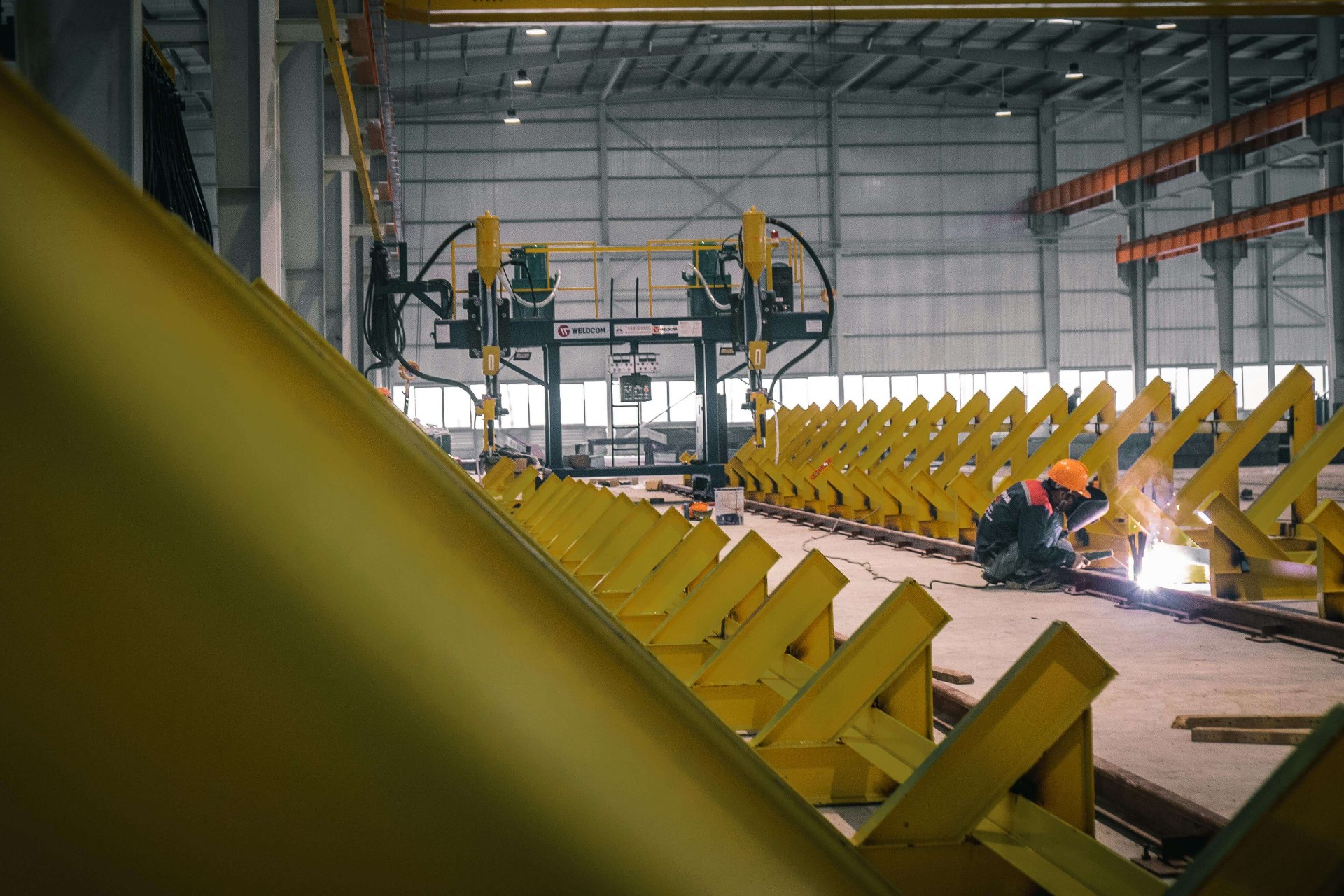
Vietnamese fabricators handle laser cutting, CNC bending, stamping, punching, robotic and manual welding, powder coating, electroplating, and other surface treatments at a level that meets European industrial standards. Stainless steel, carbon steel, and aluminium are all well established raw material streams. Typical export production runs cover automotive brackets and structural parts, industrial enclosures and cabinets, structural steel for equipment frames, agricultural and material handling components, and precision hardware. Mass production lead times of 25 to 45 days are realistic once tooling and process validation are settled.
High tolerance precision components that require coordinate measuring infrastructure and the metrology discipline to use it consistently are still concentrated in a smaller pool of suppliers. Complex multi material assemblies that combine machined parts, electronics, and fabricated structures rarely sit naturally inside one Vietnamese factory's competence. Specialty alloys for which the local steel and aluminium supply chain has thin or no domestic production introduce raw material lead times and certification gaps that can derail a programme. Not every component that today comes out of China at European or Japanese OEM standard can be replicated at equivalent quality in Vietnam. In well established product categories, the gap is narrowing fast. For machined rather than fabricated parts, our guide to CNC machining and precision metal parts in Vietnam covers an adjacent but distinct supplier base.
Where the Suppliers Are Located
Two clusters do most of the work, and the practical difference between them matters for how a European buyer should approach sourcing.
The northern cluster sits around Hanoi, Bac Ninh, Hung Yen, and Vinh Phuc. It grew up around electronics and automotive OEM supplier networks, with Samsung, LG, and Japanese Tier 1 suppliers setting the quality benchmark for the surrounding fabricators. Buyers in the north tend to find tighter tolerances, more disciplined quality systems, and a workforce that has spent a decade reading drawings to Japanese and Korean standards. The trade off is higher labour cost and tighter capacity at peak periods.
The southern cluster runs across Binh Duong, Dong Nai, Ba Ria Vung Tau, and Long An. The focus tilts toward larger fabrication, structural steel, equipment frames, and assemblies. Volumes are higher, the product range is broader, and the cost position on standard fabrication is more competitive. The southern cluster also benefits from proximity to deep water ports at Cai Mep, which simplifies container shipping for bulky parts.
Cluster choice should follow the part, not the price. Precision parts belong in the north. Larger and lower complexity fabricated assemblies belong in the south.
Understanding the Supplier Landscape
Vietnam's sheet metal supplier market comprises layers of different companies, and understanding them saves significant time during evaluation.
At the top sit a relatively small number of sophisticated fabricators, typically foreign-invested or joint venture companies, or Vietnamese-owned factories that have been supplying directly to Japanese, Korean, or European OEMs. These often carry ISO 9001 or IATF 16949 certification, have modern equipment, and quality systems that produce consistent output. They are in high demand and price accordingly.
Below these is a larger tier of capable but less consistent local fabricators. These can produce good parts under close supervision and with well-defined specifications, but quality control depends heavily on the individual running the line, measurement infrastructure is often limited, and corrective action processes are informal. They are price-competitive and can work well for less demanding applications with the right oversight model in place.
The third layer is the most important to recognise early: trading companies presenting themselves as manufacturers. These are intermediaries who subcontract production to factories they may or may not have properly assessed. They are common in online directories, often have good-looking websites and quick quote turnaround, and are genuinely difficult to distinguish from actual manufacturers without a factory visit. The practical problem is that a trading company adds margin, reduces transparency, and removes direct access to the production floor where quality issues need to be resolved.
Knowing which layer a supplier sits in is not something a price quote reveals. It requires a direct factory visit, a production floor assessment, and familiarity with what genuine manufacturing capability looks like at each tier. That distinction is also what makes a reliable supplier database more useful than a directory search - the work of sorting layers has already been done.
Common Mistakes European Buyers Make
The recurring patterns are familiar. Buyers select suppliers on the strength of a competitive quote before any factory assessment has confirmed that the quoted process is real. They treat ISO 9001 as evidence of capability rather than a starting point for evaluation. They underestimate tooling investment and the time required for first off process validation, then push for full volume before the trial batches have shown stable output. They build the sourcing model around remote management from Europe and assume that monthly video calls will substitute for someone walking the line. They confuse a trading company with a manufacturer because the website looked the same. They place volume orders before a validated trial batch has confirmed that the supplier can hold tolerance, finish, and delivery date together. Each of these mistakes is cheap to avoid up front and expensive to recover from once parts are arriving non conforming and the production line in Europe is waiting.
The pattern that hurts most is the absence of any local quality oversight model from the start. Quality problems that surface six weeks into production are rarely fixable on a phone call. Automotive buyers in particular face stricter consequences, an angle we cover further in our guide on sourcing automotive parts and components in Vietnam.
Managing Quality Without Local Presence
When something goes wrong and the buyer has no local presence, the timeline of the problem follows a predictable shape. A non conformance shows up in the first shipment. Email exchanges with the supplier produce a corrective action plan that no one in Europe can verify in person. The next shipment shows partial improvement and new defects. Time zones add half a day to every round of clarification. Weeks pass. By the time the issue is fully understood in Europe, the supplier has already produced two more batches with the same problem.
Local oversight, in practice, means a routine of factory visits during active production, in process inspection at critical stages, a first article inspection signed off before mass production begins, and a pre shipment inspection that physically checks parts against drawings before the container is sealed. This is not optional infrastructure for a serious sourcing engagement in Vietnam, it is standard practice. Buyers can build it through their own staff, through a local quality inspection partner, or through a sourcing partner that holds the relationship end to end. Building it into the model from day one is what we support clients to do.
How to Start
Define the component specification before approaching any supplier. Drawing tolerances, surface finish standards, material grade and certification requirements, expected annual volume, and packaging requirements should all be defined. Verbal or email descriptions create rework and noise that the supplier will price into the quote.
Identify two or three candidate suppliers in the cluster that matches the part. A precision automotive bracket belongs in the northern cluster, a powder coated equipment enclosure can be quoted competitively in the south.
Run a structured RFQ with full technical drawings, not a high level enquiry. Compare quotes on like for like terms and challenge any number that looks too low. Conduct factory assessments before placing any order regardless of how strong the supplier claims look on paper. Place a validated trial batch with full first article inspection before committing to volume production. Build local quality oversight into the engagement from day one. See our work on supplier identification and origin assessments for how we structure both sides for European buyers.
Closing
Vietnam's sheet metal manufacturing base will keep attracting investment and improving in capability. The trade agreements will keep shifting landed cost arithmetic in Europe's favour. The Japanese and Korean OEM presence will keep raising the floor on quality expectations across the supplier network.
European buyers who build qualified supplier relationships now, with proper assessment processes and local quality oversight in place, will have a meaningfully more reliable supply chain in three years than those who wait until prices have risen and capacity at the strongest factories is already committed. The opportunity rewards seriousness rather than speed. Buyers who do the qualification work properly today are the ones who will not be scrambling for backup suppliers when their primary China source disappears from a tariff notice.