Why Vietnam is now on the radar for precision metal sourcing
Three forces are converging. First, labour costs in China's industrial heartland have risen steadily. Factory wages in China's manufacturing regions have increased nearly 50% over five years, and while automation absorbs some of that, CNC machining still requires skilled operators and process engineers whose costs continue to climb. Second, tariff exposure and supply chain concentration risk have made single-country sourcing strategies increasingly difficult to defend to boards and customers. Third, Vietnam's own manufacturing base has matured: the electronics boom brought in foreign investment, skilled labour training programmes, and industrial infrastructure that the machining sector now benefits from.
According to Vietnam's General Statistics Office, FDI in manufacturing has grown consistently, with metalworking and mechanical engineering attracting a growing share. Japanese, Korean, and Taiwanese manufacturers have established machining operations in the country, often initially to serve their own assembly plants but increasingly offering capacity to external buyers.
The question is not whether Vietnam has CNC machines. It does. The question is which parts they can produce to the standards your application requires, at what volume, and what qualification effort it takes to get there. The companies that approach this with specificity do well. The ones that treat "Vietnam" as a generic alternative to "China" tend to learn the same expensive lessons that sourcing projects in Asia consistently produce.
What Vietnam can actually supply
Vietnam's CNC machining capability is strongest in medium-complexity, medium-volume work using standard materials. Specifically, that means:
- CNC turned and milled components in mild steel, aluminium (6061, 7075), and stainless steel (304, 316). Bushings, couplings, adapters, and connector bodies are produced routinely.
- Structural brackets and mounting plates for industrial equipment, electronics enclosures, and machinery frames.
- Medium-complexity machined housings and flanges, typically requiring 3-axis or simple 4-axis operations.
- Jigs and fixture components for production lines, particularly those serving the electronics and automotive assembly sectors.
- Shaft and spindle work for lower-tolerance applications where tolerances of 0.05mm and above are acceptable.
Where capability is still developing: tight-tolerance work below 0.02mm remains difficult outside a small number of facilities. Exotic alloys (Inconel, titanium, Hastelloy) are rarely processed. Complex 5-axis multi-feature parts with compound geometries are possible at select shops but not widely available. High-volume precision production with near-zero reject rates requires process discipline and SPC infrastructure that most Vietnamese shops are still building.
For buyers sourcing automotive-grade metal parts, the overlap is real but bounded. If your application requires medium-complexity parts in standard materials with tolerances above 0.05mm, Vietnam is increasingly viable. If you need sub-0.02mm repeatability on exotic alloys at high volume, you are looking at the wrong market.
The machine park reality
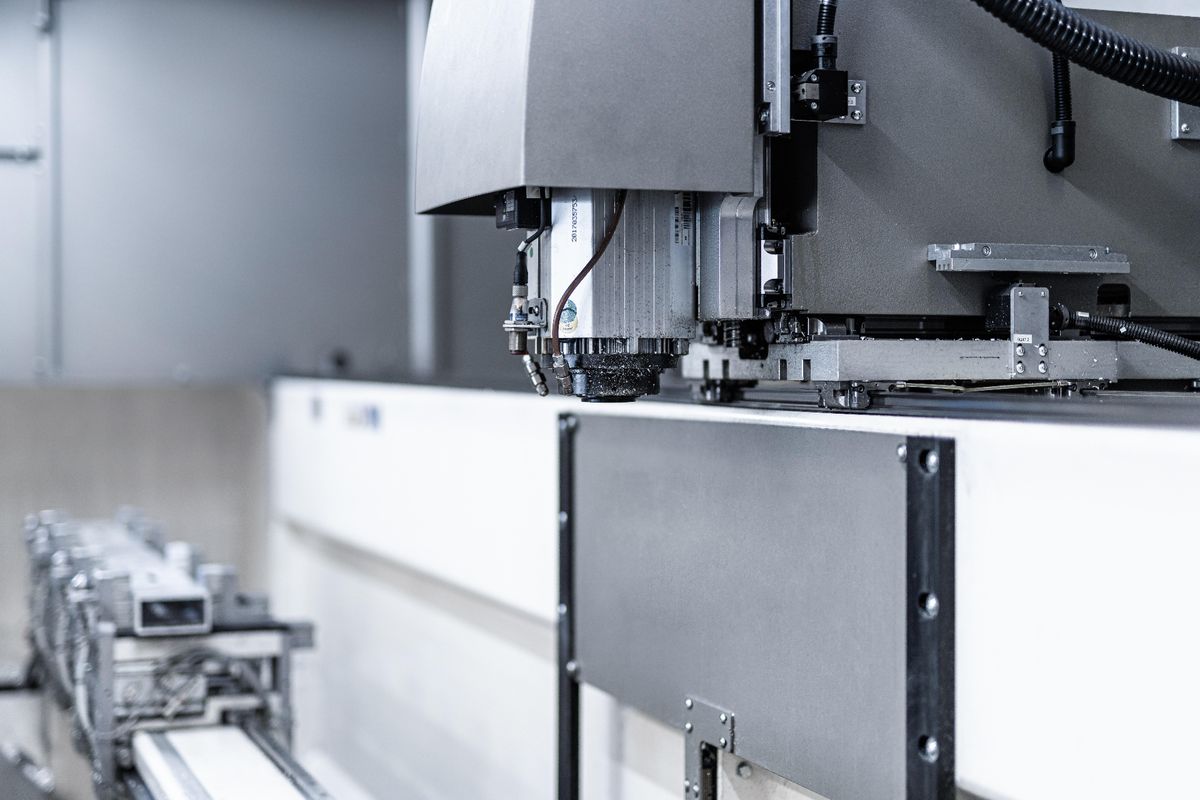
Understanding what equipment actually sits on factory floors in Vietnam tells you more than any capability brochure. Three-axis vertical machining centres (VMCs) are widespread, with brands like Mazak, Fanuc, Haas, and various Taiwanese and Chinese makes common across both northern and southern industrial zones. These machines handle the bulk of Vietnam's CNC output and are perfectly adequate for a large range of medium-complexity parts.
Four-axis and five-axis capability exists but is concentrated in a smaller number of facilities, most of which are foreign-invested (Japanese, Korean, or Taiwanese operations). Horizontal machining centres (HMCs) are less common than VMCs. CNC turning centres, including multi-turret and sub-spindle configurations, are available at established shops but the depth of turning capability is thinner than in China's Yangtze or Pearl River Delta clusters.
What this means for buyers: when evaluating a Vietnamese CNC shop, ask specifically about machine brands, models, and age. Ask about spindle hours and maintenance schedules. Ask whether 4-axis or 5-axis work runs on dedicated machines or is set up ad hoc on 3-axis platforms with indexing fixtures. The distinction matters because it directly affects repeatability and cycle time. A shop that claims 5-axis capability through a rotary table bolted to a 3-axis VMC is not the same as one running a dedicated Okuma or DMG Mori 5-axis centre.
Where production is concentrated
Northern Vietnam
The Hanoi, Bac Ninh, Hai Phong, and Vinh Phuc corridor forms the core of northern Vietnam's metalworking sector. This region is heavily influenced by Japanese and Korean manufacturing culture, thanks to decades of investment from companies like Canon, Samsung, Honda, and Toyota. The result is generally higher process discipline: shops in this region are more likely to use standardised work instructions, maintain calibration records, and follow structured quality procedures.
Hai Phong is particularly relevant for export-oriented machining because of its deep-water port access. Components can move from factory to container with minimal domestic logistics friction. Northern shops also benefit from proximity to the Chinese border, which matters when raw materials (steel bar, aluminium billet) are sourced from Guangdong or Guangxi.
Southern Vietnam
Ho Chi Minh City, Binh Duong, and Dong Nai host a larger and more varied machining base. The southern cluster is bigger in total capacity but more mixed in quality: you will find everything from basic job shops to well-equipped facilities serving multinational OEMs. The port infrastructure is strong (Cat Lai and Cai Mep), and transit times to Europe are comparable to the north. For buyers evaluating suppliers, the southern region requires more selective filtering but offers more options. For a detailed look at structuring supply chain flows in Vietnam, including port selection and logistics design, we have covered this separately.
What buyers get wrong
Assuming quoted tolerances reflect process capability. A supplier who quotes 0.02mm on a drawing is telling you they can hit that number on a good day with their best operator on a freshly calibrated machine. That is not the same as holding that tolerance across a 500-piece production run. Always ask for Cpk data or process capability studies on critical dimensions. If the shop cannot provide them, that tells you something about where they are in their quality journey.
Not verifying measurement equipment. A CMM (coordinate measuring machine) listed on a capability sheet is not the same as a CMM in daily calibrated use. During factory visits, check when the last calibration was performed, who performed it, and whether calibration records match the machine's actual usage frequency. We have visited shops where the CMM was used primarily as a surface plate.
Underestimating post-process capability. Anodising, hard chrome plating, nickel plating, heat treatment, and surface grinding are frequently subcontracted in Vietnam rather than done in-house. This adds lead time, introduces quality handoff risks, and can complicate traceability. Ask specifically where each post-process happens, what quality controls apply at the subcontractor, and whether the primary supplier takes responsibility for the finished part or only the machined blank.
Conflating unit price with total landed cost. The per-piece price from Vietnam may look 15 to 25% lower than a comparable Chinese quote. But total landed cost includes tooling amortisation, raw material markup (often higher because of import dependency), shipping, quality inspection at origin, potential rework, re-inspection on arrival, and the management overhead of qualifying and maintaining a new supplier. Run the full calculation. The savings are often real but smaller than the headline number suggests.
Quality and certification landscape
ISO 9001 is the common baseline among established Vietnamese CNC shops, but implementation quality varies enormously. Some facilities treat it as a living system that governs daily operations. Others obtained the certificate because a customer required it and have not meaningfully integrated its principles into their workflow. The certificate alone tells you very little.
IATF 16949 (the automotive quality management standard) exists in facilities serving automotive OEM customers but is not widespread across general precision machining. If your parts serve automotive, medical, or aerospace applications, expect to conduct your own qualification rather than relying on existing certifications.
Structure your first-article inspection (FAI) to include: a complete dimensional report against the drawing with actual measurements (not just pass/fail), material certifications with mill test reports traceable to the raw material supplier, surface finish measurements using calibrated instruments, and hardness testing where applicable. Require the supplier to submit this documentation before you approve production.
On-site visits are non-negotiable. Not as a courtesy, but as a qualification requirement. The gap between what a supplier presents on paper and what you find on the factory floor can be significant. Plan for at least one visit during qualification and periodic visits during production. If you cannot visit yourself, engage a qualified third-party inspection firm with experience in Vietnam's metalworking sector.
Supply chain and logistics considerations
Lead times for CNC machined parts from Vietnam depend heavily on complexity and material availability. Prototype runs of 5 to 20 pieces in standard materials typically take 2 to 4 weeks from order confirmation, assuming tooling is not required. Production runs of 200 to 2,000 pieces generally require 4 to 8 weeks, including material procurement, machining, post-processing, and inspection.
Raw material is a critical variable. Vietnam imports the majority of its steel bar, aluminium billet, and stainless coil, primarily from China, Japan, and South Korea. This creates both cost and lead time exposure: when global steel prices spike or when there are disruptions at border crossings or ports, Vietnamese machining shops feel it directly. Always ask suppliers about their material sourcing strategy, what buffer stock they maintain, and whether they have established relationships with material traders that can smooth supply.
Transit times from Hai Phong (north) or Cat Lai/Cai Mep (south) to European ports run approximately 25 to 30 days. To US West Coast, expect 18 to 22 days. For incoterms, FOB from the nearest Vietnamese port is the most common arrangement for component buyers, giving you control over the ocean freight leg while the supplier handles domestic logistics and export customs.
Minimum order quantities vary significantly. Smaller job shops will take orders as low as 50 to 100 pieces but will price accordingly. For cost-effective production, batch sizes of 500 or more typically provide the best balance. Tooling costs are usually quoted separately and amortised over the first production order or the first several orders, depending on the agreement. Get this in writing before production begins.
Rules of origin and trade agreements
The EU-Vietnam Free Trade Agreement (EVFTA) offers significant tariff reductions for manufactured goods exported from Vietnam to the EU. For machined metal components, many product categories qualify for reduced or zero duties, making Vietnam more cost-competitive than non-FTA countries on a landed-cost basis.
The catch is rules of origin. For metal parts specifically, "sufficient processing" typically requires that the machining operations performed in Vietnam constitute a meaningful transformation of the raw material. Importing steel bar from China, turning it on a lathe in Vietnam, and shipping it to Europe does not automatically qualify. The value added in Vietnam needs to meet threshold requirements, and the documentation supporting your origin claim needs to be audit-defensible from the first shipment.
In practice, this means maintaining detailed records of material sourcing (with mill certificates and country-of-origin documentation), manufacturing process steps performed in Vietnam, and a clear value-add calculation. Many buyers underestimate this requirement until they face a customs audit. Setting up the documentation framework correctly at the start is significantly less expensive than reconstructing records retroactively.
Other Southeast Asian markets worth considering
Thailand has a more mature precision machining sector than Vietnam. The depth of tooling capability is greater, the pool of experienced CNC operators is larger, and quality system penetration (including ISO 9001 and IATF 16949) is more established. Thailand's automotive production output dwarfs Vietnam's, and the supplier base around Bangkok, the Eastern Seaboard, and Rayong has decades of experience serving demanding OEM customers. For high-complexity or tight-tolerance machined parts, Thailand often makes more sense despite higher labour costs.
Malaysia has pockets of precision machining capability, particularly in Penang and Johor, driven by decades of electronics and semiconductor manufacturing. For small, high-precision turned parts (connector pins, sensor housings, micro-machined components), Malaysian suppliers can be competitive.
The key insight is that these markets complement rather than simply substitute for each other. Vietnam for medium-complexity work at competitive cost. Thailand for higher-specification parts with established quality infrastructure. Malaysia for electronics-adjacent precision work. Buyers serious about Southeast Asian sourcing should understand the strengths of each market and allocate parts accordingly, rather than forcing everything into a single country.
An honest assessment
Vietnam is a real and growing option for precision metal sourcing, particularly for medium-complexity components in standard materials at medium volumes. The machining sector has improved significantly over the past decade, driven by foreign investment, growing domestic demand, and the spillover effects of Vietnam's electronics manufacturing boom. For the right parts, the combination of competitive labour costs, improving capability, and EVFTA tariff advantages makes a compelling case.
It is not yet the right answer for every application. Sub-0.02mm tolerance work, exotic alloys, complex 5-axis geometries, and high-volume production with near-zero reject rates remain challenging outside a small number of facilities. Surface treatment and post-processing often depend on subcontractors whose quality is harder to control. The qualification effort required is greater than what you would invest with an established Chinese supplier you have worked with for years.
The buyers getting this right are treating Vietnam as a strategic addition to a diversified supply base, not as a shortcut or a blanket replacement for China. They invest in proper supplier qualification, they visit factories, they verify process capability rather than trusting quoted tolerances, and they structure their programmes around what Vietnam can reliably deliver today rather than what it might be capable of in three years. That approach takes more work upfront, but it produces supply lines that actually hold up.