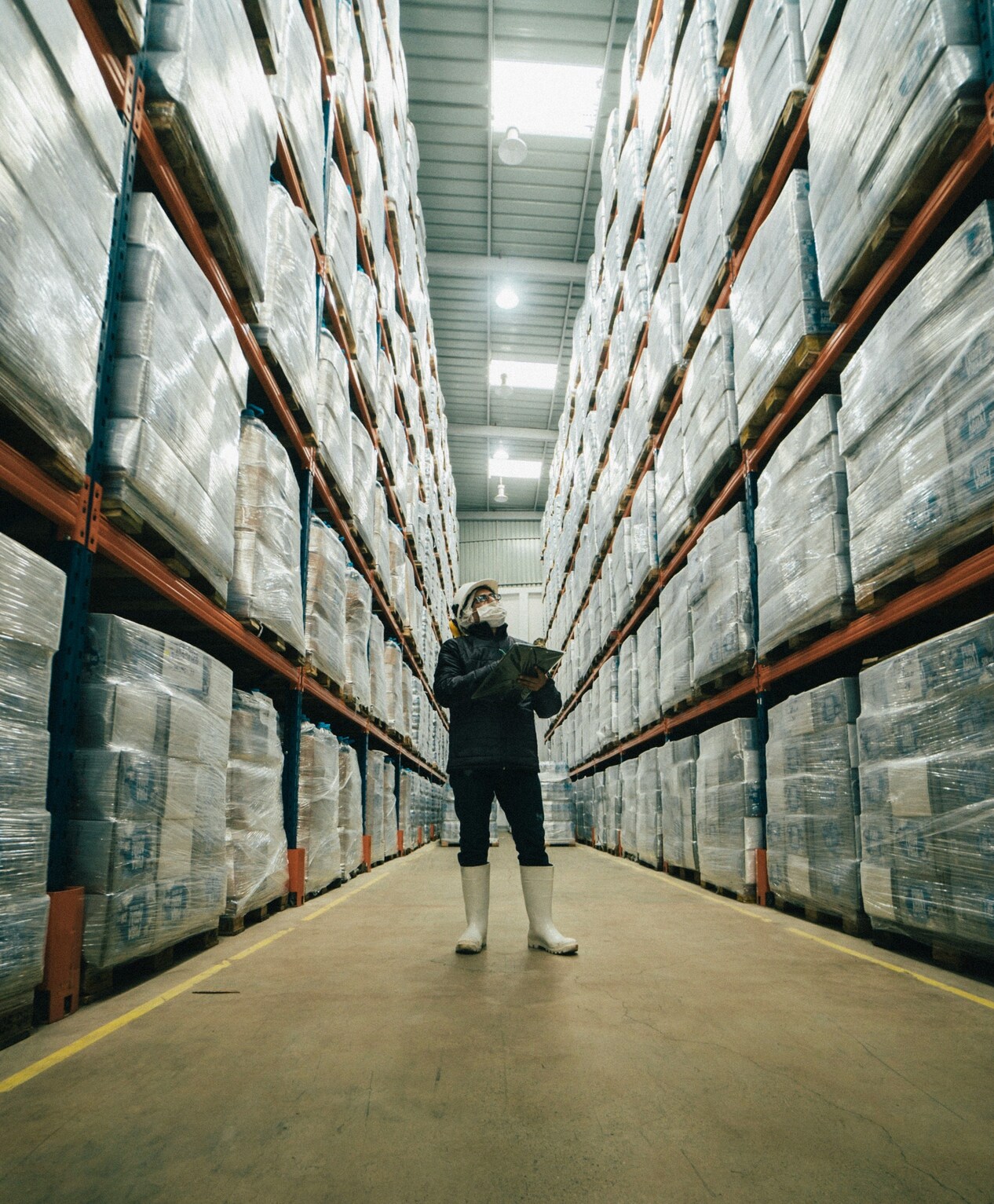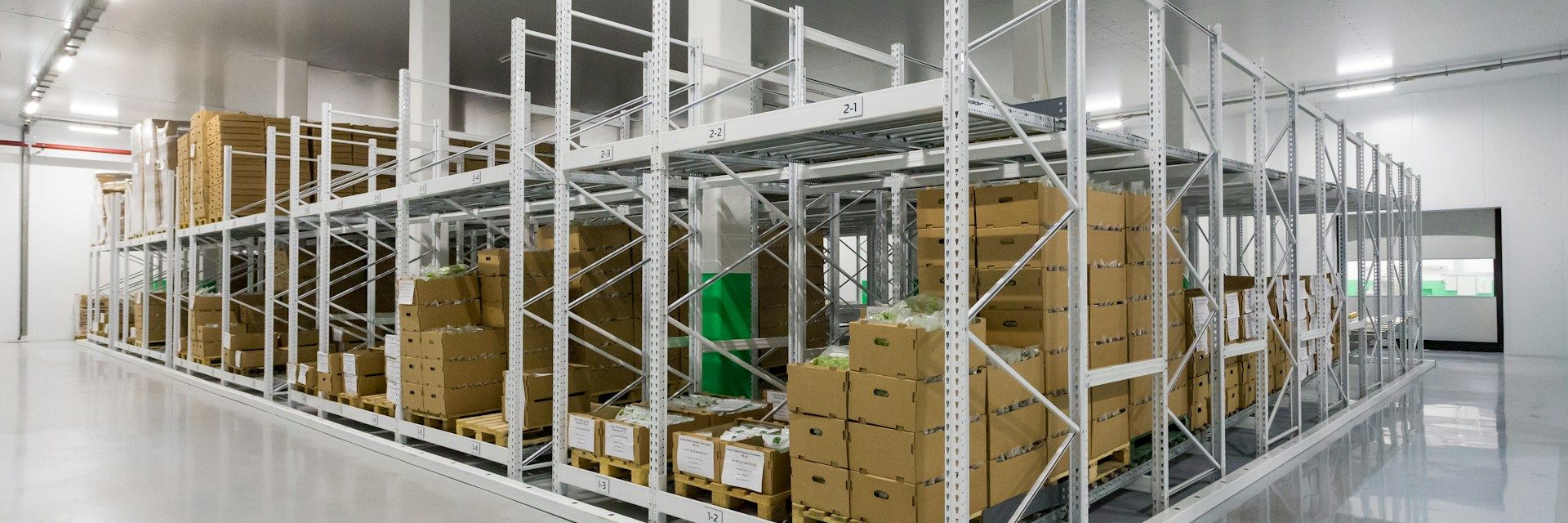
Vietnam has the widest gap between cold chain demand and cold chain capacity of any major market in Southeast Asia. The country has cold storage density of around 132 pallets per 10,000 people, against 204 in Thailand and 1,592 in Japan, a comparison we covered in our regional cold storage guide. Demand keeps growing thanks to increased seafood exports, modern retail, and pharmaceutical distribution, while capacity has not kept up.
For equipment and technology suppliers, that means construction, refrigeration, and monitoring demand for years to come. For investors, the opportunities are plentiful too. This guide covers the Vietnam-specific picture: where the market concentrates, who is building, and what both types of reader should look at before committing.
The Vietnam cold storage market
Vietnam's cold storage sector is in the middle of a major expansion. National capacity is growing from around 1.3 million pallets toward a projected 1.7 million by 2028 roughly 70% more space in four years, on top of 27 facilities added since 2021. Demand is still expected to outpace supply: storage rates run around US$1.27 per pallet per day, against US$0.94 in Indonesia, among the highest in the region. One nuance worth knowing: the investment wave has temporarily softened occupancy at some newly opened facilities, with recovery expected as export and retail demand absorbs the new space.
What is driving the demand
Three primary reasons why Vietnam's cold chain grows: seafood exports, raw food imports, and domestic distribution through modern retail and food service.
For seafood, Vietnam is one of the world's largest seafood exporters, and shipments of shrimp and pangasius to the EU, US, Japan, and South Korea require documented temperature control from farm to port. EU and US buyers tighten traceability requirements year by year. Only 20–25% of Vietnam's perishables move through cold chains, against 40–50% in Thailand, which is both the problem and the opportunity: high-value exports are competing for scarce certified space.
The domestic side is catching up from a low base. In 2020, only 8.2% of domestic food producers used a cold chain system, against 66.7% of export manufacturers, a gap that modern retail, e-grocery, and rising food safety expectations are now closing. Pharmaceutical distribution adds a third layer: GDP-compliant cold chain is a baseline requirement for a healthcare market we covered in our Vietnam healthcare guide, and it commands higher margins than food storage.
Where the market concentrates: two corridors
Almost all serious cold storage investment in Vietnam lands in one of two corridors, and both site selection and sales effort should follow them.
In the south, the Long An–Dong Nai cluster around Ho Chi Minh City is the heart of the market. It sits between the Mekong Delta's seafood and agricultural output, the country's largest consumer market, and the Cai Mep deep-water port. This is where the landmark foreign investments have concentrated, and where competition for well-located land is strong.
In the north, the Hai Phong–Hanoi corridor serves the manufacturing base, food imports, and the capital's growing modern retail sector, with Hai Phong's port as the anchor. The northern market is smaller in cold storage terms but growing, and it connects to the same logistics infrastructure we described in our guide to renting a warehouse in Vietnam. Cold storage is, structurally, the premium temperature-controlled end of the same corridors.
Who operates and who is investing
The market splits into two tiers: Local providers hold the majority of designed capacity, long-established operators serving the seafood industry and domestic distribution. Foreign players lead the modern, premium segment, and the recent wave of Japanese and Korean investment shows where the market is heading.
In March 2025, Korea's Lotte Global Logistics broke ground on a US$34 million cold chain center in Nhon Trach, Dong Nai: 5.5 hectares, due to start operations during 2026, with a further 7,400-pallet facility planned in Vinh Long. In June 2024, Japan's Nichirei opened its 20,000-pallet cold store in Long An, with ten temperature-controlled rooms spanning −25°C to 22°C. And Japan's Daiwa House Logistics Trust acquired a built-to-suit facility in Long An backed by a 20-year lease with a Japanese logistics tenant.
Two practical implications follow. The premium standard in Vietnam is now being set by these foreign entrants, which means local operators upgrading to compete become equipment buyers. And the deals themselves show the prevailing investment model: purpose-built facilities anchored by long-term tenants, in the two corridors.
The opportunity for suppliers of related equipment
For refrigeration and cold room suppliers, the 2024–2028 build-out is a pipeline of greenfield projects: insulated structures, refrigeration plant, racking, doors, and controls for hundreds of thousands of new pallet positions.
Electricity is the dominant operating cost in a cold store, typically half or more of total operating expenses, and Vietnamese electricity prices keep rising. EVN, the state utility, raised the average retail price by 4.8% in May 2025, the fourth increase since early 2023, a cumulative rise of roughly 18%. Every tariff increase shortens the payback period on efficient compressors, better insulation, heat recovery, and intelligent controls.
Beyond the initial build, temperature monitoring and IoT systems are becoming contract-award differentiators as operators compete on documented temperature integrity for export customers. And the service reality applies with full force: a cold store cannot tolerate refrigeration downtime, so credible local technicians, stocked spares, and guaranteed response times are part of the core offer. A supplier without local service capability will lose to one who has it, regardless of equipment quality.
Considerations for investors
The prevailing model for new development is built-to-suit anchored by a long-term tenant, the Daiwa House transaction, with its 20-year lease signed before acquisition. The filter we set out in the regional guide applies with extra force in Vietnam: confirm who will use the facility before committing capital. A cold store with a committed seafood processor, retailer, or 3PL is a fundamentally different investment from a speculative build, however tight the market looks today.
Two changes deserve attention in the model. First, Vietnam ended location-based incentives for industrial park projects in October 2025, corporate income tax benefits now depend on sector and zone qualification rather than industrial park status. So returns should be modeled on the current rules, not legacy assumptions. Second, energy cost escalation is the main operating risk: with four tariff increases in under three years, investment models should stress-test against further rises, and facilities built energy-efficient from day one will hold a structurally better cost position than those planning to retrofit.
Site logic follows the corridors. Land near the southern cluster is scarcer and more expensive, but that is where the seafood volumes, the consumer market, and the anchor tenants are.
Challenges to price in
The honest list is short but real. Electricity tariffs are rising and will likely continue to. Qualified refrigeration engineers and GDP-trained warehouse managers are scarce, and turnover is high, a constraint for operators and for suppliers' service teams alike. Service quality across the local operator base is uneven, which complicates partnerships. And well-located land in the two corridors is increasingly contested, with the current wave of investors moving quickly on the best sites.
The window
Vietnam's cold storage story is structural: export compliance, domestic consumption, and pharmaceutical distribution will need multiples of today's capacity, and the roughly 70% build-out now underway is the response.
The Japanese and Korean investors breaking ground today are securing the prime corridor sites and the anchor tenants, and the operators, once built, become long-term buyers of equipment, monitoring, and service.
How we can help
We work with equipment suppliers entering the Vietnamese market, from mapping the operators and developers actually building capacity, to structuring the distributor and service relationships that cold chain customers demand.
For investors, we support site evaluation in the two corridors, operator and tenant due diligence, and the operational verification that a long-term committed investment deserves. If Vietnam's cold chain is on your map for the next three years, get in touch, the corridor locations and anchor tenants being secured now will define who is well positioned in 2030.