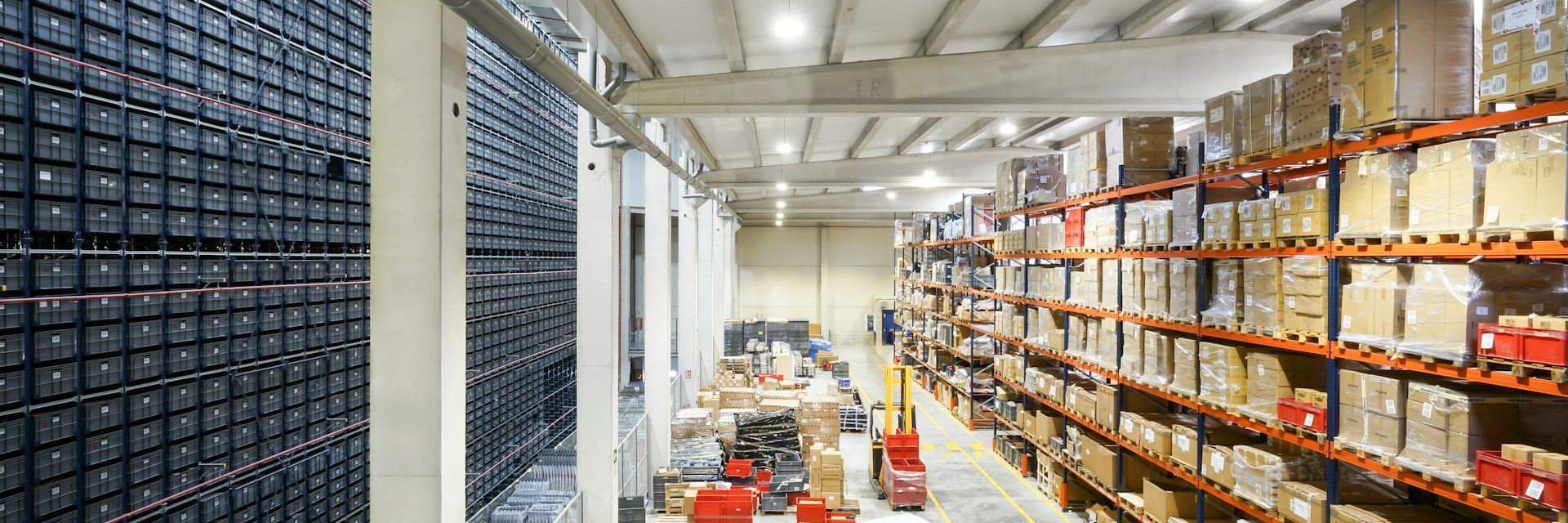
A warehouse lease is often one of the larger recurring costs in a company's local operation in Vietnam. A mid-sized facility can cost tens of thousands of dollars per month, and the total commitment over several years often surpass a million dollars. It's not unusual that companies spend insufficient time in negotiating leases before signing.
This guide covers what warehouse space costs in Vietnam, where to rent it, what is often negotiable, and mistakes that can be avoided.
Why warehouse demand keeps rising
There are three main reasons why we see an increased demand for warehouses in Vietnam. Manufacturing investment keeps arriving as companies diversify production into Vietnam, and new factories pull warehouse demand along with it. Components coming in, finished goods going out, and buffer stock in between.
At the same time, E-commerce and modern retail grow remarkably fast which creates demand for distribution space near Hanoi and Ho Chi Minh City, closer to consumers than the traditional industrial zones. Along with this, third-party logistics providers are expanding across the country to serve both, often leasing large spaces years ahead of their customers' needs.
The demand and supply are not spread evenly in the country. In the north, developers have been building quickly: modern warehouse stock reached about 2.2 million square meters in early 2026, and occupancy of that modern stock has dropped to around 65% as new buildings compete for tenants. The pipeline continues: the north is expected to add 683,000 square meters in 2026, against 313,000 in the south.
The cost to rent a warehouse
As a current reference point, average asking rents for modern ready-built warehouses were close to parity across Vietnam in early 2026, around US$5.04 per square meter per month in the south. In the North, it was slightly higher at around US$5.12, with premium new projects asking more and older or simpler buildings available below these averages.
It's possible to achieve a rent lower than the advertised one as landlords offer incentives to attract tenants, especially where new supply is competing, which is exactly why benchmarking before negotiating is important.
Building standard comes at a cost and a modern facility with high ceilings, strong floor loading, good docking, and sprinkler systems sits at the top of the range. Location within a province matters too: proximity to a port, an expressway junction, or the city adds real money per square meter. So does the lease term and landlords price shorter commitments higher.
An important point is that the advertised rent is not the final cost as the quoted rate often covers a bare shell. On top of that come monthly service charges, a security deposit of usually three months' rent, utility connections, fit-out, and VAT. For a 5,000 square meter facility at current average rents, the base rent alone is around US$25,000 per month, and across a 3-to-5 year term with annual increases, the total commitment moves well past one million dollars.
Where to rent: the main logistics locations
Vietnam's warehouse market concentrates in two regions, and they serve different purposes.
In the north, the key locations are Hai Phong, with direct deep-water port access and some of the strongest recent leasing performance, along with Bac Ninh and Hung Yen serving the manufacturing corridor around Hanoi. This is the region to be in if your warehouse serves factories as the tenants around you are manufacturers and the infrastructure is built for industrial flows. It is also the region where new supply keeps arriving, which gives tenants genuine negotiating leverage: a landlord with a half-empty new building competes for credible international occupiers.
In the south, demand centers on Binh Duong, Dong Nai, and Long An around Ho Chi Minh City, the country's largest consumer market, with the Cai Mep deep-water port serving direct routes to Europe and the US. This is the region for distribution to Vietnamese consumers and for export flows out of the southern manufacturing base. Prime supply here is growing more slowly than in the north, which means fewer options, less negotiating room, and a search that should start earlier. Provinces one ring further out, such as Tay Ninh, offer lower rents and larger available spaces, but at the cost of longer trucking distances and weaker connectivity.
Worth mentioning is also that it's important to follow your flow of goods, not the cheapest rent. A warehouse that saves US$0.50 per square meter but adds an hour of trucking to the port or your customers might not be a saving, trucking costs and delivery times compound every day, while rent is fixed. Vietnam's national logistics strategy is improving road and port connectivity, but the differences between locations remain significant today.
Lease terms
A typical warehouse lease in Vietnam runs 3 to 5 years, with a deposit of around 3 months' rent, an annual rent increase of a few percent, service charges on top of base rent, handover as a bare shell, and an obligation to handover the space according to its original condition when leaving.
Many tenants underestimate how many of these are negotiable, especially in locations with new supply. Rent-free periods for fit-out, caps on annual increases, the size of the deposit, renewal options with pre-agreed terms, and break clauses are all regularly negotiated by tenants who ask. The landlord's first draft is a starting position and a company signing a multi-year commitment worth over a million dollars should treat it as just that.
Common pitfalls when renting a warehouse in Vietnam
Signing at the asking rent: Asking rents and achieved rents can differ significantly, landlords are actively offering incentives, especially where new supply competes for tenants. Companies that benchmark comparable projects before negotiating consistently do better.
Underestimating annual rent increases: An annual increase of 4% sounds small, but over a five-year term it compounds to a final-year rent about 17% above where you started, and adds much to the total cost of the lease. Caps on annual increases are negotiable and worth negotiating.
Not verifying fire safety certification: A warehouse without valid fire prevention and fighting certification (PCCC) can create real operating and insurance problems for tenants. Confirm the building's certification and legal status before signing, not after.
Confusing quoted area with usable area: The area on the lease and the area you can actually rack and operate are not always the same. Measure and confirm what you are paying for.
Overlooking service charges and reinstatement: Service charges vary much between projects and are part of the true monthly cost. Reinstatement obligations at exit can be expensive if the fit-out was substantial, they should be defined clearly at signing, when your negotiating position is strongest.
Treating renewal as administration: This one deserves its own section.
Renewing an existing lease
Renewal is the point where the tenant holds the most leverage. Landlords know that losing a good international tenant is expensive with vacancy, marketing, broker fees, and fit-out for a replacement. Tenants, meanwhile, overestimate the pain of moving and accept escalated renewal terms.
Benchmarking your renewal terms against what comparable space currently costs should be done several weeks before the renewal conversation starts. Sometimes the result is a better rent and just as often it is a better overall package: a capped annual increase, an improved renewal option, or investment from the landlord into the facility. Companies that simply sign the renewal letter get none of these.
If you are weighing a longer-term decision, whether to keep renting or move toward your own facility, our article on ready-built versus build-to-suit factories in Vietnam covers that decision in depth.
How we can help
We help you identify new objects and benchmark the rent and terms you are quoted against what comparable warehouses in the same area cost. We support in negotiating the clauses that cost money over a full term: annual increases, service charges, deposits, and reinstatements. Besides, verifying the practical details that can otherwise cause problems later, from fire safety certification to the true usable area of the space.
We do this for companies signing their first warehouse in Vietnam and for companies renewing an existing lease, which is where the most money is typically given away.
If you are evaluating a warehouse in Vietnam or have a renewal coming up, get in touch. A benchmarking conversation costs nothing and usually tells you within a week whether your current terms are worth challenging.